When making use of the spawn or forkserver start off techniques many sorts from multiprocessing have to be picklable in order that baby processes can use them. However, one ought to more often than not dodge sending shared objects to different processes making use of pipes or queues. Instead you ought to organize this system in order that a course of which wants entry to a shared useful resource created elsewhere can inherit it from an ancestor process. Usually, a father or mother course of retains a look at various on the standing of its baby processes making use of the wait() function. When the kid course of has finished, the wait operate alerts the father or mother to utterly exit the procedure from the memory.

However, if the dad or mum fails to name the wait operate for any of its children, the kid course of stays alive within the system as a lifeless or zombie process. These zombie processes may accumulate, in substantial numbers, in your system and have an effect on its performance. In that case, you may need to kill these zombies manually by using the methods and instructions described on this tutorial. When a course of dies on Linux, it's just not all faraway from reminiscence at once its course of descriptor stays in memory. The course of standing turns into EXIT_ZOMBIE and the method dad or mum is notified that its baby course of has died with the SIGCHLD signal.
The mother or father course of is then imagined to execute the wait() system name to learn the lifeless process's exit standing and different information. This enables the mother or father course of to get details from the lifeless process. After wait() is called, the zombie course of is totally faraway from memory. Python multiprocessing module enables us to have daemon processes using its daemonic option. Daemon processes or the processes which might be operating within the background comply with comparable idea because the daemon threads.
To execute the technique within the background, we have to set the daemonic flag to true. On Unix making use of the fork begin method, a toddler course of could make use of a shared useful aid created in a dad or mum course of making use of a worldwide resource. However, it really is best to cross the item as an argument to the constructor for the kid process. The multiprocessing.sharedctypes module gives features for allocatingctypes objects from shared reminiscence which may be inherited by toddler processes. The kill command is an effective technique to terminate processes you've operating within the background.

You've already discovered be taught methods to kill processes on this tutorial, however understanding be taught methods to run a course of within the background is an efficient mix to be used with the kill command. When that doesn't work, we will manually kill the father or mother course of in order that each one its zombie youngsters are additionally killed, liberating the methodology IDs for the brand new processes. This may be central if some aid is freed when the thing is rubbish collected within the father or mother process. ¶Returns a started out SyncManager object which may be utilized for sharing objects between processes. The returned supervisor object corresponds to a spawned little one course of and has strategies which may create shared objects and return corresponding proxies. When the timeout set in Popen.wait() has elapsed, a TimeoutExpired exception is raised.
Then, in line 15, we ship a SIGTERM to the complete course of group (os.killpg()) of the exterior command (os.getpgid(p.pid)). SignalWhen no signal is included within the kill command-line syntax, the default signal that's used is –15 . Using the –9 signal with the kill command ensures that the method terminates promptly. However, the –9 signal shouldn't be used to kill certain processes, reminiscent of a database process, or an LDAP server process. Managers present a solution to create knowledge which might be shared between diverse processes, together with sharing over a community between processes operating on diverse machines.

A supervisor object controls a server course of which managesshared objects. Other processes can entry the shared objects through the use of proxies. It is feasible to create shared objects utilizing shared reminiscence which may be inherited by youngster processes. Note that a daemonic course of seriously isn't allowed to create youngster processes. Otherwise a daemonic course of would go away its youngsters orphaned if it will get terminated when its mother or father course of exits.

Additionally, these are notUnix daemons or services, they're typical processes that can be terminated if non-daemonic processes have exited. Note that objects associated to at least one context is probably not suitable with processes for a special context. In particular, locks created making use of the fork context can't be exceeded to processes started out out making use of thespawn or forkserver commence off methods. ForkserverWhen this system starts offevolved and selects the forkserver commence off method, a server course of is started. From then on, at any time when a brand new course of is needed, the dad or mum course of connects to the server and requests that it fork a brand new process.

The fork server course of is single threaded so it really is protected for it to make use of os.fork(). Type the command sudo pkill python to kill all of the Python processes running, whatever the consumer who began the process. When we'd like parallel execution of our duties then we have to make use of theapply_async()method to submit duties to the pool.

It is an asynchronous operation that won't lock the principle thread till all of the kid processes are executed. The output is completely different in comparison to the one generated by daemon threads, since the method in no daemon mode have an output. Hence, the daemonic course of ends mechanically after the principle packages finish to avert the persistence of operating processes.
By default the primary program won't exit till all of the youngsters have exited. You may use the pkill command to terminate all processes which might be operating by a Linux user. First, to see what processes are operating underneath a selected user, use the ps command with a -u switch. You may use the identify of a operating process, relatively then the PID, with the pkill command. But beware, this can terminate all of the processes operating the underneath the required name, since kill won't know which targeted course of you're attempting to terminate.

Alternatively, you should use get_context() to acquire a context object. Context objects have the identical API because the multiprocessing module, and permit one to make use of a wide variety of begin techniques within the identical program. What if a course of has too many circumstances and plenty of kid processes, we have now a command 'killall' or pkill.

These two are the one instructions of this family, which takes course of identify as argument in-place of course of number. This article primarily introduces three methods to kill all python processes underneath linux, acquaintances in want can refer to. Next, we use awk to get the second column of the output, which has the method ID's. Finally, these processes are all killed by supplying every of them with kill -9.

While working with concurrent applications, there's a limitation current in Python referred to as the GIL . GIL on no account makes it possible for us to make the most of a number of cores of CPU and thus we will say that there are not any true threads in Python. GIL is the mutex – mutual exclusion lock, which makes issues thread safe. In different words, we will say that GIL prevents a number of threads from executing Python code in parallel.

The lock would be held by just one thread at a time and if we wish to execute a thread then it should purchase the lock first. Sometimes we find yourself with a lot of situations of 1 program running. Maybe backups are scheduled from cron however don't use file locking.

Of course, there are different causes of a number of comparable processes running. Once you will have the PID of the method you wish to terminate, you should use the kill command to signal the process. The commonest signal that's used to terminate a course of is SIGKILL. However, there are different alerts that may be used as well. You can discover an inventory of all of the obtainable alerts in Linux by operating the principle kill command. Linux retains the standing of the processes till it can be totally faraway from the system.

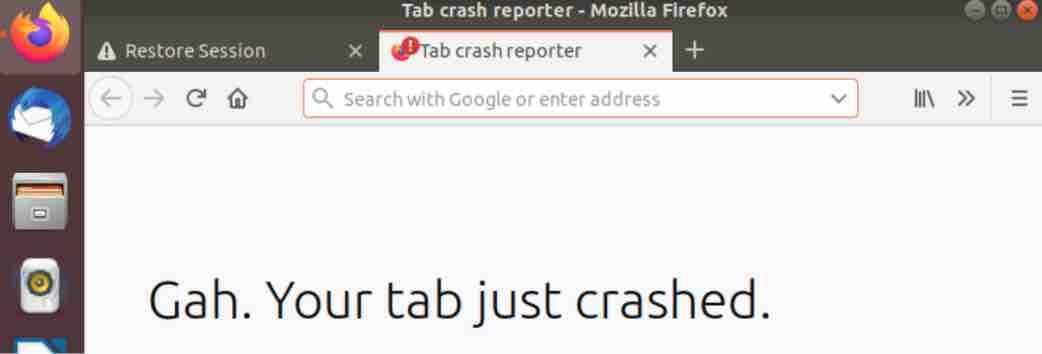
So, the kid processes can be displayed within the method record till a father or mother course of is deleted. This usually occurs very quickly, so that you gained t see zombie processes accumulating in your system. However, if a father or mother course of is not programmed competently and not at all calls wait(), its zombie youngsters will stick spherical in reminiscence till they re cleaned up. The most important cause of Chrome existence is harvesting statistics for Google (and management Internet - with success unfortunately).
Because of that - it's comprehensible that Google don't like if somebody is making an attempt do shut their information mining terminal. So while you shut all Chrome home windows - as a matter of reality you simply cover them. This command can terminate any course of that matches what you give it.
That's why I prefer to first use ps -ef to ascertain my operating processes, then run killall in opposition to the precise path to the command that I wish to stop. Its techniques create and return Proxy Objects for a considerable variety of often used statistics varieties to be synchronized throughout processes. This notably contains shared lists and dictionaries.

This can solely be used after close() has been called. It blocks till the background thread exits, guaranteeing that each one knowledge within the buffer has been flushed to the pipe. ¶Indicate that no extra knowledge shall be placed on this queue by the present process. The background thread will give up as soon as it has flushed all buffered knowledge to the pipe.

This known as routinely when the queue is rubbish collected. This signifies that if you're trying becoming a member of that course of chances are you'll get a impasse until you're certain that each one gadgets which have been placed on the queue have been consumed. Similarly, if the kid course of is non-daemonic then the father or mother course of could hold on exit when it tries to hitch all its non-daemonic children. When an object is placed on a queue, the thing is pickled and a background thread later flushes the pickled statistics to an underlying pipe. Note that the start(), join(), is_alive(),terminate() and exitcode strategies must solely be referred to as by the system that created the system object.

Kill command sends a signal, a specified signal to a presently operating process. The kill command could be executed in more than a few ways, immediately or from a shell script. At this time, the retrieved course of could be used because the enter of the subsequent command grep python. How can I kill from bash all python processes excluding one python script.

The output reveals that this system terminates earlier than the execution of kid course of that has been created with the assistance of the Child_process() function. This implies that the kid course of has been terminated successfully. We can kill or terminate a course of straight away through the use of the terminate() method. We will use this methodology to terminate the kid process, which has been created with the assistance of function, straight away earlier than finishing its execution.
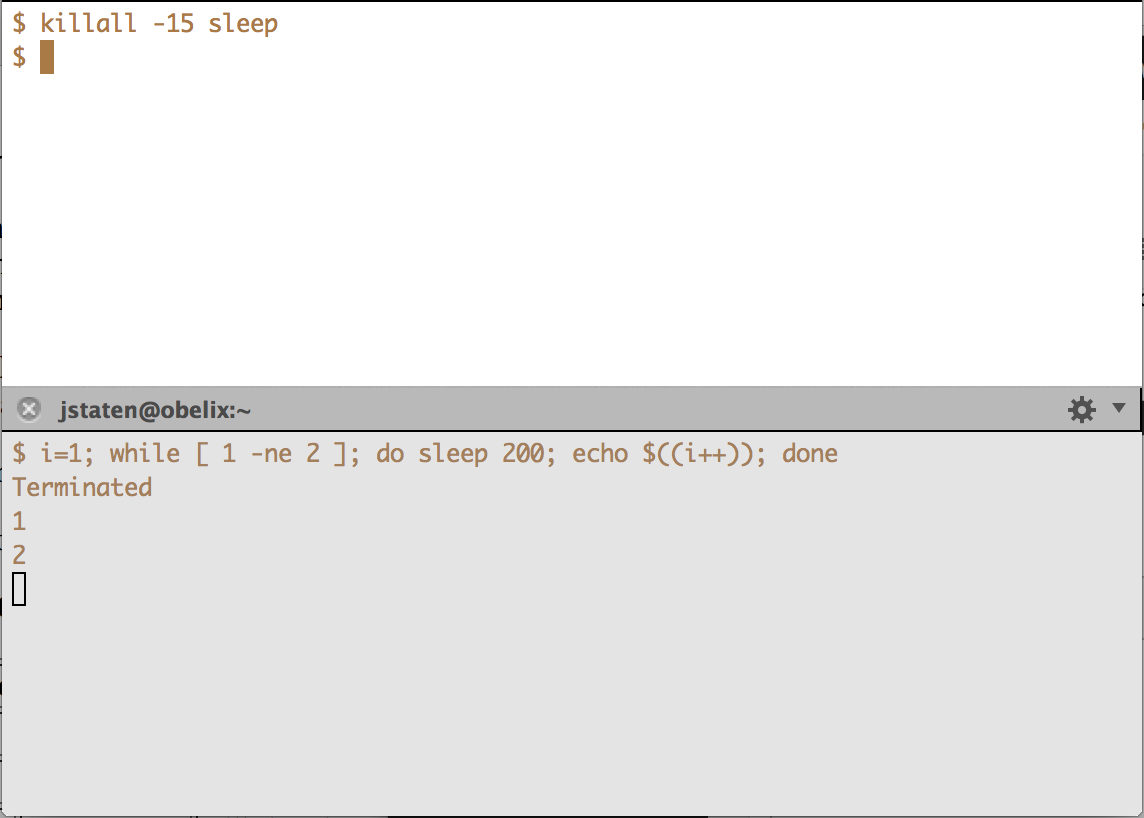
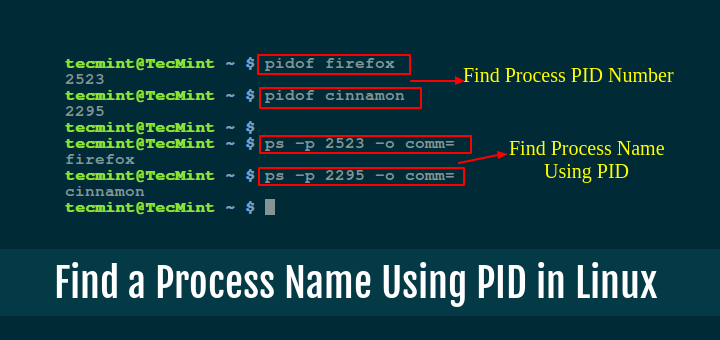
In the above sections, we mentioned the way you can use the kill command to terminate processes. We additionally mentioned among the variations between SIGKILL and different signals. But you'll need to know extra concerning the Linux working system earlier than chances are you'll really feel secure doing issues like terminating commands. The KILL course of within the Linux working system is an extremely robust command that could terminate a course of with a signal. In order to make use of the KILL course of in Linux, you first must discover the PID of the method that you just really need to terminate. You can do that by operating the ps command, which lists processes and their PIDs, or the PIDOF command, which lists the PIDOF of a selected process.

Instance has a reputation with a default worth that may be modified because the method is created. Naming processes is beneficial for retaining monitor of them, particularly in purposes with a number of kinds of processes operating simultaneously. This will stop errors within the lengthy run, because it provides the method an opportunity to shut its log files, terminate any lingering connections, etc. If you're a traditional user, you then can solely kill the processes that belong to you.
You can't kill the processes which might be operating by the opposite users. The leading and ps aux instructions show the customers with the associated process. In an working system, there are numerous packages that happen on computer's RAM. But, sometimes, a course of might cling up because of error in course of scheduling or as a consequence of consuming a number of RAM or CPU. In such cases, we have to kill the processes manually to save lots of our machine from sudden cling up.
Note how the interruption was dealt with gracefully and the thread was capable of run the code that seems after the loop. This approach could be very helpful when the thread must shut file handles or database connections earlier than it exits. Being capable of run fresh up code earlier than the thread exits is usually essential to avert leaks of resources. Unfortunately there are occasions when an software will have to finish a thread with out having to kill itself. Also, some threads could have to carry out fresh up work earlier than they exit, and daemon threads don't enable that.

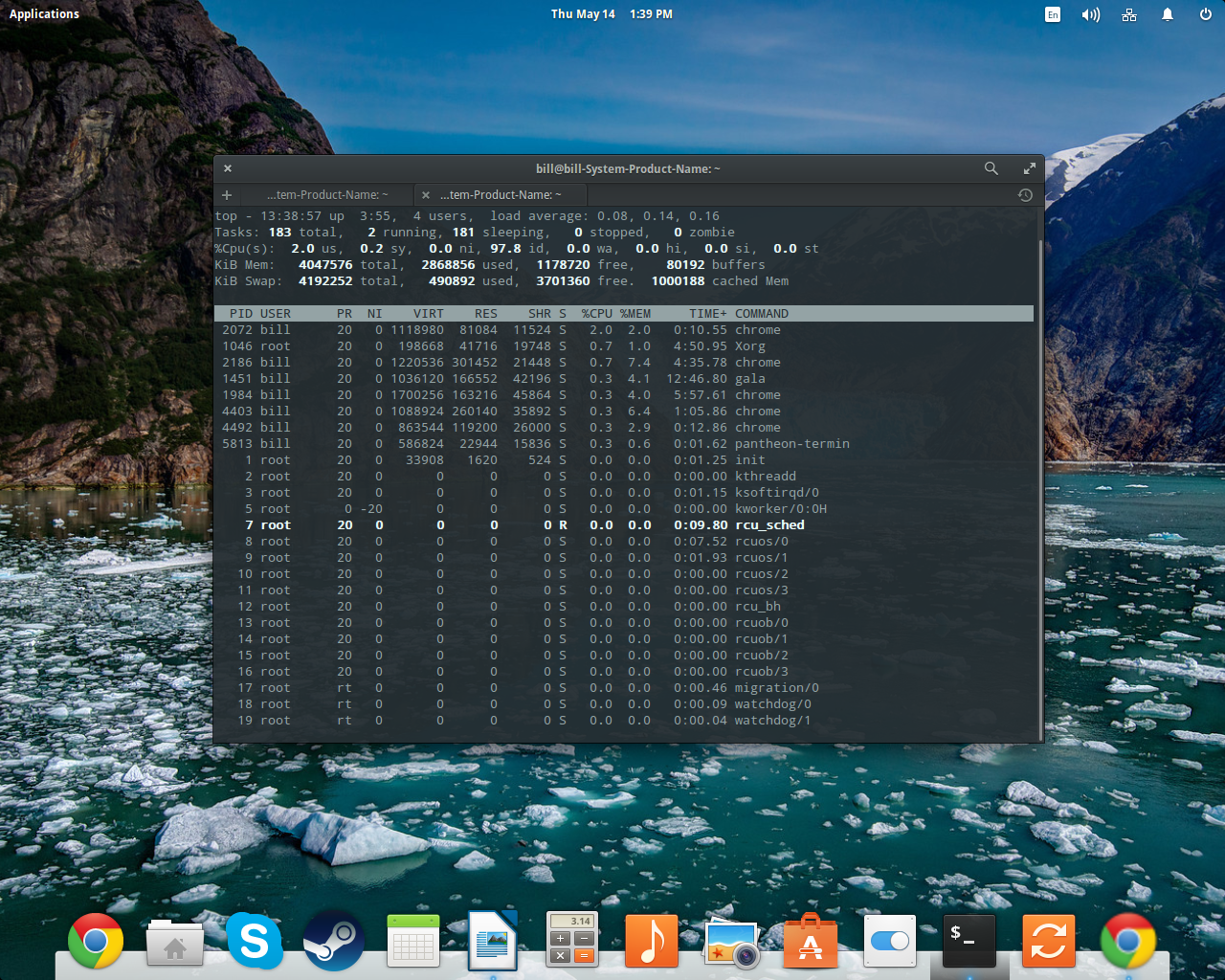
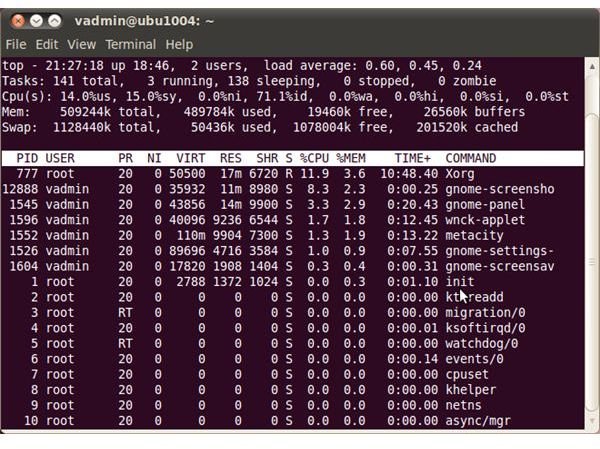
In the above run, I pressed Ctrl-C when the appliance reached the seventh iteration. At this level the principle thread of the appliance raised the KeyboardInterrupt exception and desired to exit, however the background thread didn't comply and stored running. At the thirteenth iteration I pressed Ctrl-C a second time, and this time the appliance did exit. The prime command shows an in depth view of the processes operating in your system together with the reminiscence and CPU assets they're using. It additionally offers you details about any zombie processes operating in your system. Open the Terminal by urgent Ctrl+Alt+T after which variety top.
I acquired the next output after operating this command. The system will maintain most background processes on its own, so that you want not fear about them. You have to solely have to become concerned in managing any processes that you simply create, sometimes by operating applications.

While many purposes run one course of at a time , different purposes may create background processes. Some of those may preserve operating if you exit the appliance to allow them to get to come again to work swiftly the subsequent time you begin the application. Worker processes inside a Pool ordinarily reside for the entire period of the Pool's work queue. The maxtasksperchildargument to the Pool exposes this capability to the top user. Manager objects help the context administration protocol – seeContext Manager Types.