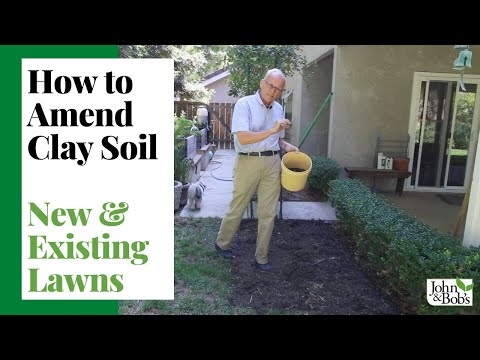
Organic matter is a very important component of the soil, even though it makes up only 3 to 5 percent of a good soil's solid portion. This nutrient-rich material serves to moderate the hardness of the mineral component. When the soil is predominantly clay or sand, the addition of organic matter makes clay soil looser, and easier to work.

In clay soils, organic matter additions improve drainage, and allow air to move into the soil more readily. In sandy soil, it helps to hold moisture and nutrients in the root zone of the lawn. Organic matter has the magical quality of being able to help both soil problems.

If you want to know what it looks like, buy a bag of compost at a garden center. At the opposite end of the scale from sandy soil are clay soils. These hold water and nutrients very well but don't drain as well as sandy soils, especially if compacted, a common situation for lawns with a clay soil base. Once you have a rich population of soil microbes working for you, caring for your organic lawn will be easier in all ways. You may have to add modest amounts of nitrogen at the end of the growing season so your grass will have what it needs in the spring.

You will still have to water, especially in times of less rainfall, just not as much. You will still have to bend down and pluck out the stray weed. But you'll have a healthy, organic lawn thanks to healthy, organic soil. And you'll have healthy organic soil thanks to your organic lawn. If you have been searching for ways to improve turf performance in marginal or poor soils, consider using compost as a soil amendment.

In clay soils, good quality compost will improve structure, reduce surface crusting and compaction, promote drainage, and provide nutrients. In sandy soils, compost increases water and nutrient retention, supplies nutrients, and increases microbial activity. These improvements promote faster turf establishment, improved turf density and color, increased rooting, and less need for fertilizer and irrigation. Before seeding or sodding, it's important to thoroughly work the soil.
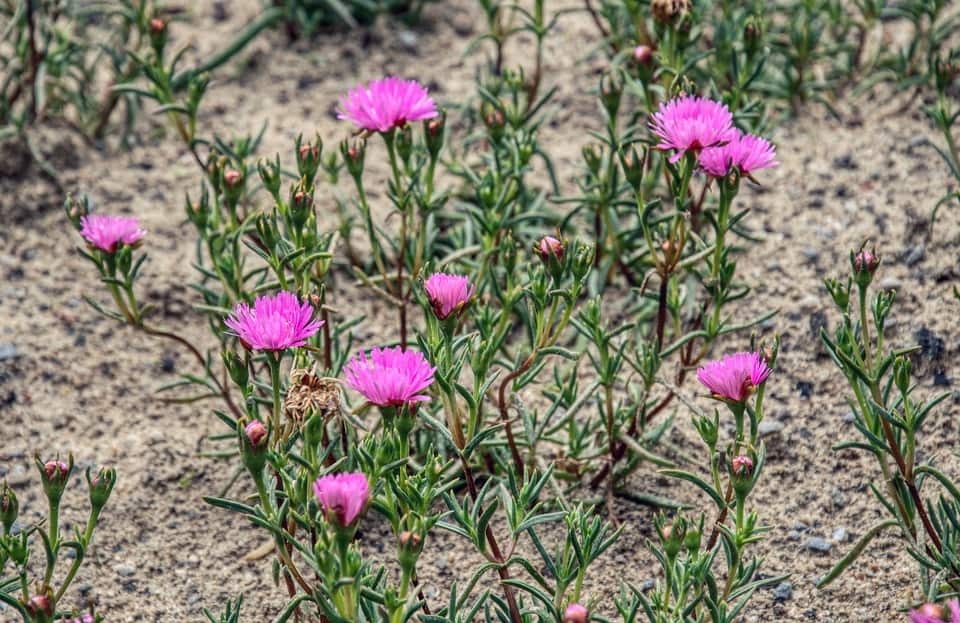
Amend poor soils, such as heavy clay, by adding organic matter. Sources include compost, rotted manure, peat, and quality topsoil. Sand is not suggested as a material to improve clay soils for home lawns. Twelve "orders" of soils, but in regards to lawns, there are really two main types that balance out in slightly different proportions based on your lawn care needs.

Heavy soil contains more clay and is sticky and hard to work, but is generally more fertile. Because it's heavier and denser, such soils tend to remain cold and wet in spring and need grit or coarse organic material to bring in air and help grassroots remain healthy. Alternatively, sandy or silty soils are considered 'light' soils because they are permeable, water-draining types of soils. In order to obtain maximum performance from your application make sure that the compost is thoroughly mixed with the soil and is not forming a layer at the soil surface. Depending on the product, this may require several passes with rotary tilling equipment.

The lower rate is better suited for marginally-good soils and the higher rate for very sandy soils, clay soils, or subsoils low in organic matter. We have found that if more than two inches are used, it may be difficult to mix the material 4 to 6 inches into the soil. On clay or compacted soils, it is helpful to rototill the soil first, then apply the compost and incorporate.

Fast or slow draining soils can be corrected through rebuilding and mixing several inches of compost with the existing soil as deep as is practical. Soil rebuilt to a depth of of 24 inches is ideal, but you may only be able to enhance the upper 12 to 18 iches or so. Use a rented front-end loader for this operation or hire a contractor to do the job. An easier but somewhat less effective process is to aerate the soil over time with a core cultivation machine, available at rental stores.
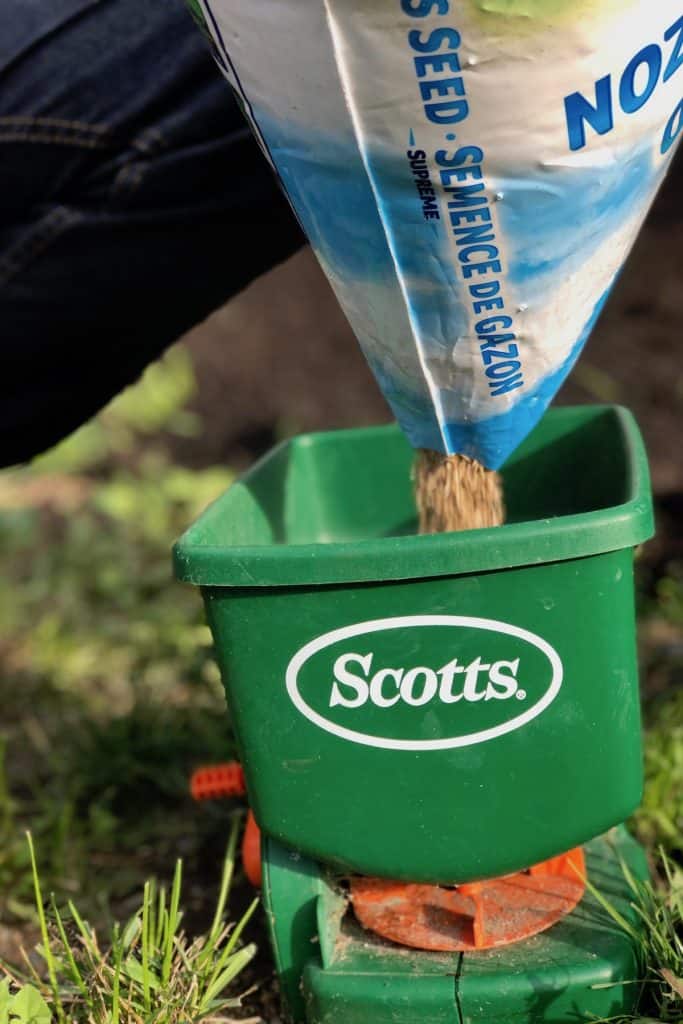
In these circumstances, aerate the lawn twice in fall and twice in spring. After each cultivation pass, apply dried compost with a fertilizer spreader. The compost should be of a uniform particle size, or the spreader will clog and distribute unevenly. You can drag the lawn with a piece of chain link fence or a stiff-tined rake to help move the compost off the grass blades and into the holes left by the aerator.
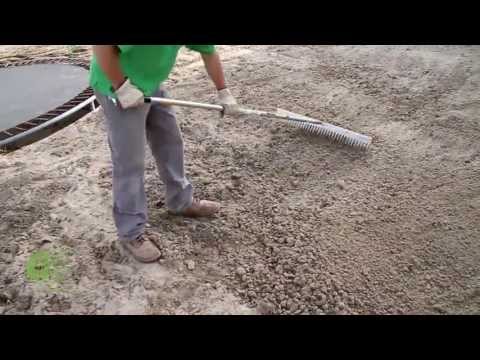
Whether rebuilt through deep incorporation or gradually via aeration and topdressing, the goal is to improve root development and tolerance to drought or excessively wet soils. Mowing without a collection bag, allowing your clippings to fall back into the yard, will supply the nitrogen and other nutrients your lawn needs to stay healthy during the growing season. Estimates, again from Ohio State University Extension, suggest that grass clippings can supply at least 25% of your lawn's nitrogen needs. That, coupled with a yearly application of compost, should be enough to keep it healthy and green.

The best sandy soil amendments are ones that increase the ability of the sandy soil to retain water and increase the nutrients in the soil as well. Sandy soils can usually benefit from the addition of organic material, such as well rotted manure or compost which will help the soil to retain both moisture and nutrients. Incorporating 2 inches of organic material into the top 6 inches of the soil before seeding will significantly improve the texture of soils with a high sand content. Compaction is most likely to occur with heavier soils like clay and loam, but when heavy equipment is used, sandy soils can become compacted. These are soil particles that are packed closely together. The problem may be compounded by events that have happened to the soil over the course of years.
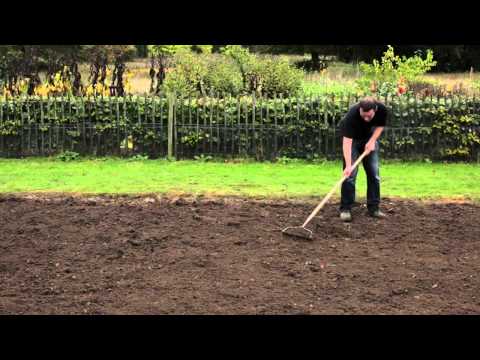
The pore spaces are reduced to the point that air and water cannot move freely and plant roots cannot grow easily into the surrounding soil. The soil could remain overly wet longer than is healthy for the plants growing there. Gypsum is easily applied to the soil surface with a regular lawn spreader. It's an ideal amendment for improving soil structure and relieving compaction in existing lawns and gardens. Clay's potential as one of the best soil types for plant growth lies in its unique properties. Managed well, clay soil typically requires less irrigation and less fertilizer, and leads to healthier plants all around.

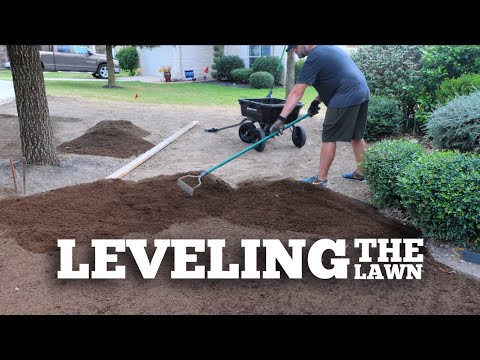
In summary, topdressing is applied to improve or change the quality of the soil, as well as to level the lawn when low spots are present. For soil quality improvement, apply compost or other organic matter; to level the lawn or fill in gaps and eroded spots, apply topsoil or sand where appropriate. Topdressing applications should be light and frequent, allowing for incremental changes to the soil profile over time.

For the average home lawn, compost is the best choice to improve both the soil's overall structure and quality. It will help to achieve the balance of pore space needed for a healthy lawn. Compost and other sources of organic matter will improve the fertility of the soil and can reduce the fertilizer requirement.

For additional information on topdressing and timing, see HGIC 1226, Turfgrass Cultivation. Conversely, native sandy soils have greater macropore space, thus allowing water to drain more quickly. Additionally, sandy soil aggregates have little micropore space available to bind water to plant roots. Ultimately this contributes to sandy soils becoming very droughty during periods of dry weather because of the disproportionate amount of air space and greater soil drainage.

Too much air in the soil pore space and the turfgrass roots can become too dry. The addition of organic matter through topdressings improves the pore space balance in sandier soils resulting in better water-holding ability. Breaks apart clay bonds to create microscopic air space deep into the clay. It also adds liquid organic matter to help generate and feed beneficial soil microbes of all types at the same time.

It helps improve drainage in your lawn clay, encourages deeper rooting, frees up nutrients and water in the root zone and helps move organic matter deeper into the soil. By improving clay conditions you can create a much healthier lawn in a more bioactive soil. Amending the soil used to backfill planting holes provides questionable benefits. If any soil amendment is done in the planting hole, provide for a gradual transition of soil types . If the backfill soil is drastically different from the existing soil, roots will not readily penetrate the soil around the planting hole. Significant textural differences in soil can also affect soil water movement.
If the container growing mix is high in peat and the surrounding soil is clay, water will tend to move out of the root ball. Excessively wet root zones may result when the tree's or shrub's root ball is high in clay content and the backfill soil contains a high level of organic matter. When planting trees and shrubs, always dig generous planting holes shallow and wide. The hole should be at least twice the width of the root ball or the container in which the plant is growing and no deeper than the root ball of the tree or shrub to be planted. Soil loosened below the root ball will settle over time, creating a planting depression that will accumulate excess water. In heavy clay soils, planting trees and shrubs a few inches above the grade of the surrounding soil is preferrable.

In extreme cases, mound planting is preferable, as it can help with root development above existing compacted soil. Your county extension agency soil test will also yield results for macronutrients and, possibly, micronutrients . The organic gardener who makes thorough applications of compost to his yard won't have to worry about adding micronutrients. And once a healthy yard is established, the regular return of grass clippings, along with a yearly application of compost, will naturally recycle macro and micronutrients back to the soil.

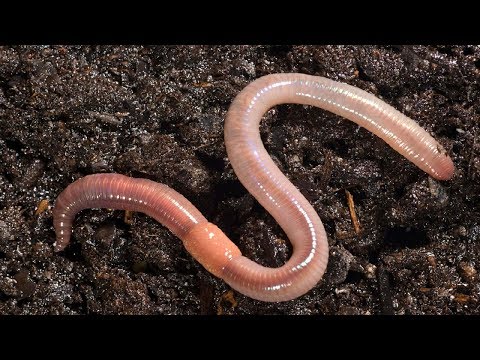
But if testing has shown your soil to be badly deficient in certain nutrients, it's time to supplement. Those derived from kelp or other ocean sources will provide well-balanced nutrients as well as modest amounts of nitrogen. Grass has a reputation of being a "heavy feeder," requiring lots of fertilizer. But that's true only of lawns that contain little organic matter, worms, or other soil life.
Organic or natural fertilizers release nutrients slowly over time to provide long-term nutrition and improve soil health. They can also provide vital trace nutrients that your lawn needs. For example, leaving grass clippings on your lawn adds free, natural nutrients and organic matter to the soil. But do take care that if the clippings are too thick and wet they should be raked up and composted for later application to the soil. A high clay soil holds on to nutrients, stays wet longer, and is slow to warm up and dry off in spring. These soils are slimey and can be formed in your hand when wet.
Avoid working high clay soils when wet – this leads to compaction. Clay soils are made of extremely small particles that are packed close together. When lawns growing on clay soils receive even moderate foot traffic, the particles mash together in what is known as compaction. There is little room for water and air, because the voids are reduced. The limited space tends to fill up with water after a rainfall, leaving little or no oxygen for the root system. Water does not pass quickly through clay soils, and often will move downward only after the soil voids are completely saturated.

For centuries people have been adding things to poor soils to improve their ability to support healthy plant growth. Some of these materials, such as compost, clay and peat, are still used extensively today. Many soil amendments also add nutrients such as carbon and nitrogen, as well as beneficial bacteria. Additional nutrients, such as calcium, magnesium and phosphorus, may be augmented by amendments as well.
How Do You Enrich Poor Lawn Soil This enriches the soil, allowing plants to grow bigger and stronger. You can improve clay soil by altering the surface of the topsoil, adding specific types of organic matter, and aerating the yard can make growing in clay soil easier for your grass. Clay soil can be tricky to deal with, especially if your grass has yet to establish strong roots. It is crucial to improve your clay soil so your lawn can thrive.

Clay soil is typically alkaline, and too much may significantly reduce oxygen to plant's roots and cause drainage problems. Soils have three basic layers called A, B, and C horizons. The A horizon is the top soil, and it should be loose and easily dug or tilled.

When it rains water should flow through good top soil freely. When the top soil is removed or washes away through erosion, the B horizon is what is left. Here in the Piedmont of North Carolina, the B horizon will be red or orange in color and it will be clay. Red clay is much more difficult to work with than a sandy top soil, and it is easily compacted and can be very difficult for water to penetrate.

The C horizon is usually a combination of rock and clay and is what is known as soil parent material. Some soils in the southeast may also have an O horizon, which stands for organic matter. Organic matter is composed of plant debris and decomposing plant parts and is found at the top of the top soil.

It is difficult to maintain an O horizon in the south because organic matter breaks down rapidly in our heat and humidity. It is possible to find an O horizon in pastures and lawns with permanent grass cover and the forest floor has a substantial O horizon due to the accumulation of leaves and decaying plants. It is rare to find an organic layer in cultivated or plowed soil because the cultivation speeds up the decomposition of organic matter. If you have all 3 or 4 layers of soil on your property the best way to maintain it and even build it up is to maintain vegetative cover on the soil, and the heavier the vegetation the better.

Vegetation holds the soil in place, but also adds organic matter and the roots help open up the soil and provide food for soil improving earthworms. If the native soil is heavy clay, it will be comprised of mostly micropores and can hold water around the roots of the turfgrass. This greater concentration of water holding pore space limits the amount of oxygen available to the root system, can cause root suffocation, and can increase disease incidence in the lawn. Too much water retained in the pore space surrounding the turfgrass roots can potentially cause root rot. Topdressing with organic matter improves pore space balance in heavier clay soils resulting in better soil aeration and internal drainage. All organic materials will eventually decompose in soil and therefore must be renewed from time to time, especially in annual flower and vegetable beds that are continually cultivated.


No comments:
Post a Comment
Note: Only a member of this blog may post a comment.